
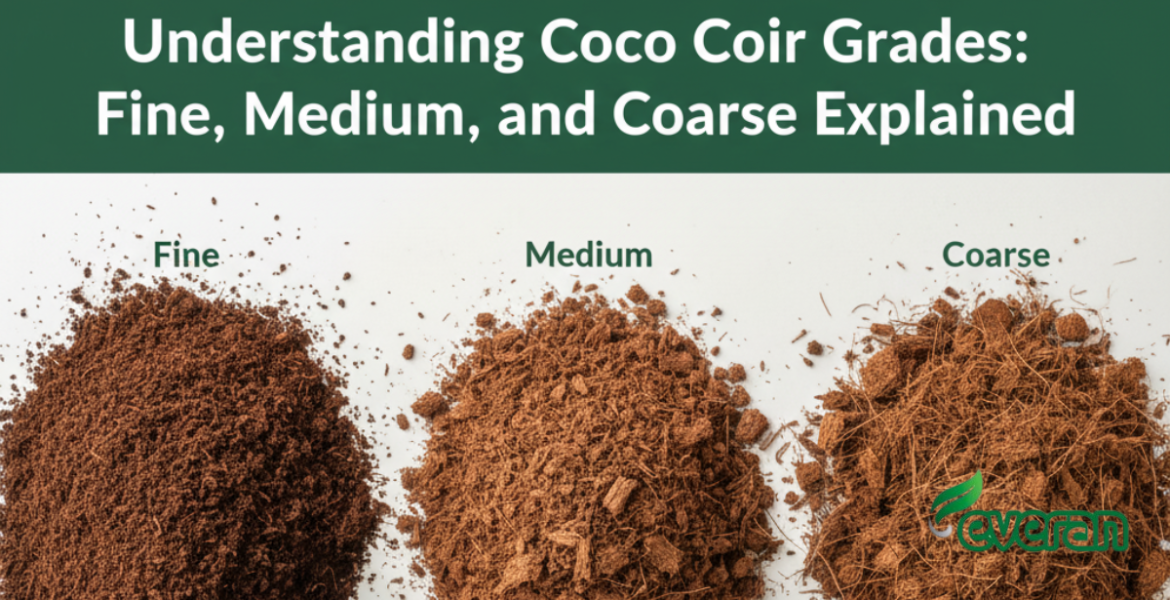
If you’ve started gardening with coco coir, you already know how effective and eco-friendly it is. Made from the fibrous husk of coconuts, coco coir offers great water retention, aeration, and root support. But here’s something many gardeners overlook — not all coco coir is the same. Depending on how it’s processed, coco coir comes in different grades: fine, medium, and coarse. Each type has unique properties suited for specific plants and coco coir growing methods. Understanding these coco coir grades helps you choose the right mix for your garden, whether you’re growing vegetables, houseplants, or hydroponic crops.
Let’s break down the differences and help you pick the perfect grade for your gardening needs.
🌾 What Do “Grades” Mean in Coco Coir?
Coco coir grades refer to the particle size and texture of the material. When coconuts are processed, the husk is ground, screened, and sorted into different sizes — from fine coco peat to long, coarse fibers.
Each grade affects:
-
Water retention (how much moisture it holds)
-
Aeration (how much oxygen reaches roots)
-
Drainage (how quickly water passes through)
Getting the right balance between these factors is key to keeping plants healthy and avoiding problems like overwatering or root rot.
🌿 Fine Grade Coco Coir
Fine-grade coco coir has a soft, soil-like texture. It’s made mostly of coco peat (pith) — the smallest particles from the husk.
Best for:
-
Seed starting and seedlings
-
Rooting cuttings
-
Moisture-loving plants like ferns, herbs, or leafy greens
Benefits:
-
Excellent water retention
-
Smooth and even texture for delicate roots
-
Great for germination trays or indoor gardens
However, fine coir can compact easily if overwatered. To improve drainage, many gardeners mix it with perlite or coco chips.
Pro Tip: For seed starting, use a mix of 80% fine coco coir and 20% perlite. It holds moisture evenly without suffocating tender roots.
🌴 Medium Grade Coco Coir
Medium-grade coco coir offers the best balance between moisture retention and aeration. It contains a mix of peat, fibers, and small chips, making it the most versatile option for general gardening.
Best for:
-
Vegetables and flowering plants
-
Container gardening
-
Raised beds and hydroponics
Benefits:
-
Balanced drainage and water-holding capacity
-
Promotes strong root development
-
Ideal for most home and greenhouse gardens
This is the grade most gardeners in the USA prefer for everyday use because it suits a wide variety of crops. It also lasts longer than fine coir before breaking down.
Pro Tip: Mix 70% medium-grade coco coir with 30% perlite or vermiculite for a lightweight, well-draining potting blend.
🌾 Coarse Grade Coco Coir
Coarse-grade coco coir contains larger chunks and long fibers, giving it an airy, open structure. It drains quickly and prevents waterlogging — making it ideal for plants that dislike soggy roots.
Best for:
-
Orchids, cacti, and succulents
-
Hydroponic systems
-
Outdoor containers in humid climates
Benefits:
-
Superior aeration and drainage
-
Prevents compaction over time
-
Extends root health and oxygen access
However, coarse coir dries out faster than other grades. It’s best used in combination with finer coco coir or compost for moisture balance.
Pro Tip: For orchids, try a mix of 60% coarse coco coir and 40% bark or perlite for perfect root airflow.
🌻 Choosing the Right Grade for Your Garden
When choosing your coco coir, think about your plant type, watering habits, and growing in coco coir setup.
-
Need high moisture? Go with fine-grade.
-
Want a balanced, all-purpose mix? Choose medium-grade.
-
Growing hydroponically or in humid weather? Pick coarse-grade for better drainage.
At Factory’s Depot, we offer premium, pre-washed coco coir in multiple grades and blends — perfect for every gardener across the USA. Whether you’re starting seeds or maintaining a hydroponic system, our coco coir products give you healthy, thriving plants naturally.


