
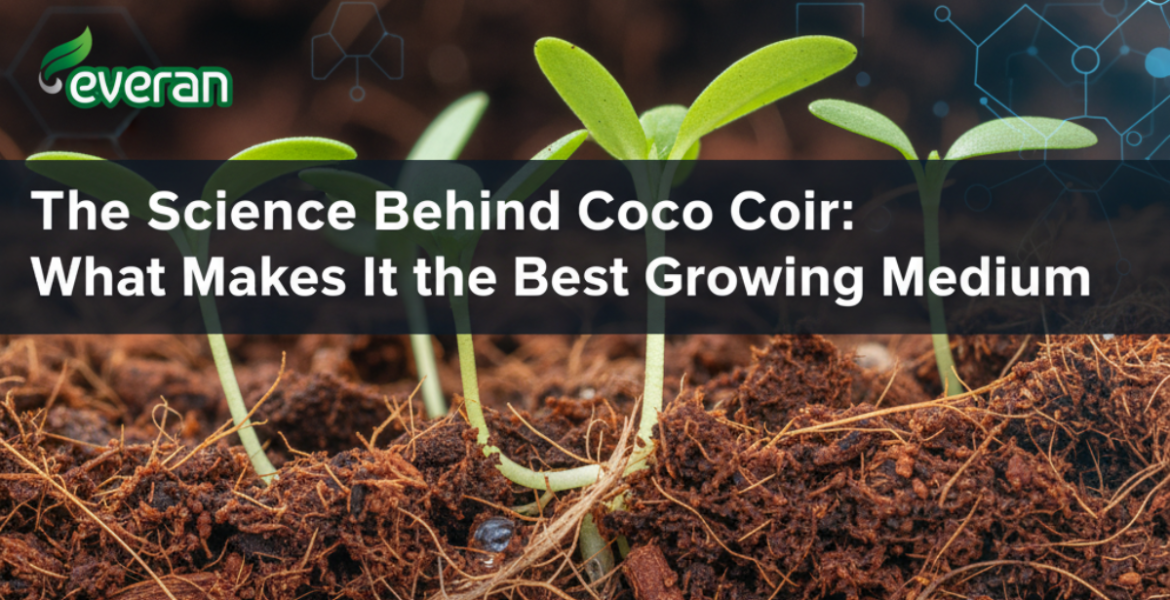
If you’ve been gardening for a while, chances are you’ve heard of coco coir — the eco-friendly, sustainable alternative to peat moss and traditional potting soil. But what exactly makes coco coir so effective? The answer lies in the science behind its structure, water-holding capacity, and nutrient behavior. In this article, we’ll explore the science behind coco coir – why coco coir is considered one of the best growing in coco coir mediums for home gardeners, hydroponic growers, and commercial farms across the USA.
🌱 What Is Coco Coir?
Coco coir is a natural fiber extracted from the husk of coconuts. After coconuts are harvested for their meat and water, the fibrous husk is processed, cleaned, and ground into a fluffy, soil-like material.
It’s made up of three main components:
-
Coco Peat (Pith): The fine, soil-like part that holds water.
-
Coco Fiber: The coarse strands that add structure and aeration.
-
Coco Chips: Larger chunks that improve drainage and airflow.
When blended properly, these components create a balanced growing medium that retains moisture while allowing excellent oxygen flow — something traditional soil often struggles to do.
💧 Moisture Retention and Aeration
One of coco coir’s greatest strengths is its water-holding ability. Scientifically speaking, coco coir has a high capillary action, which allows it to absorb and hold up to 8–10 times its weight in water. This means your plants get consistent moisture, even if you miss a watering day.
At the same time, coco coir maintains 20–30% air porosity even when fully saturated. This ensures that plant roots have continuous access to oxygen, preventing root rot and promoting faster growth.
In contrast, traditional soil often compacts over time, reducing airflow and leading to poor root development. Coco coir’s natural springy texture prevents compaction, keeping roots healthy and active.
⚗️ Neutral pH and Nutrient Control
Coco coir has a naturally neutral pH range of 5.8 to 6.5, which is ideal for most plants. This balance allows for optimal nutrient absorption and helps gardeners maintain consistency across different crops.
However, because coco coir itself doesn’t contain many nutrients, it gives you full control over feeding. You can customize your nutrient solutions for hydroponic or soil-based systems without worrying about imbalances from the growing medium itself.
This level of control is one of the main reasons hydroponic growers across the USA are switching to coco coir. It creates a predictable, stable growing environment that leads to stronger plants and higher yields.
🌿 Eco-Friendly and Sustainable
Peat moss has long been used as a soil amendment, but harvesting it can take centuries to regenerate and causes significant environmental damage. Coco coir, on the other hand, is a renewable byproduct of the coconut industry.
By using coco coir, you’re helping reduce waste and promoting sustainable farming practices. Plus, coco coir decomposes slowly, meaning it lasts longer in your garden before needing replacement — saving you money and resources in the long run.
🌾 Resistant to Pests and Diseases
Coco coir is naturally resistant to common soil-borne diseases, fungi, and pests. Its fibrous structure provides poor conditions for harmful pathogens to thrive, which means healthier plants with fewer problems.
When paired with clean growing techniques, coco coir can help reduce your need for pesticides and chemical treatments — making it an excellent choice for organic and eco-conscious gardeners.
🌻 The Takeaway
The science behind coco coir is clear: its structure, water retention, aeration, and neutral pH make it one of the most efficient and sustainable growing mediums available today.
Whether you’re starting seeds, setting up a hydroponic system, or growing vegetables in raised beds, coco coir provides the perfect foundation for plant growth.
At Factory’s Depot, we supply premium, pre-buffered coco coir products designed for home and professional growers across the USA. Choose sustainable gardening — and let science help your plants thrive naturally.


