
Hydroponic gardening has taken root across the USA — from small indoor grow tents to backyard greenhouses. At the heart of this soil-free growing method lies one crucial element: the growing medium. Among all available options, coco coir has become a favorite for both beginners and pros. It’s sustainable, easy to manage, and offers the perfect balance of water retention and aeration. But to unlock its full potential, you need to understand the right coco coir mix ratios for hydroponic gardening setup.
Let’s dive in and learn how to create the ideal blend for healthy, productive plants.
🌱 Why Coco Coir Works So Well in Hydroponics
Coco coir is made from the fibrous husk of coconuts — a renewable byproduct of the coconut industry. It’s a natural alternative to peat moss and rockwool.
Gardeners love coco coir because it:
-
Retains moisture while still draining well
-
Encourages root oxygenation
-
Is reusable after cleaning and buffering
-
Maintains a near-neutral pH (around 6.0–6.8)
-
Contains natural lignin, which resists decomposition
These qualities make it one of the most forgiving mediums for hydroponic gardening systems — from deep water culture to drip irrigation setups.
⚖️ Understanding Coco Coir Mix Components
When creating a coco coir mix, you’re not just using coco coir alone. You’ll often add perlite, vermiculite, or clay pebbles to adjust drainage and aeration depending on your plant type and system.
Here’s what each component does:
-
Coco Coir: Holds moisture and provides structure for roots.
-
Perlite: Improves air space and prevents compaction.
-
Vermiculite: Retains nutrients and moisture (ideal for seed starting).
-
Clay Pebbles: Increase drainage and stability in hydro systems.
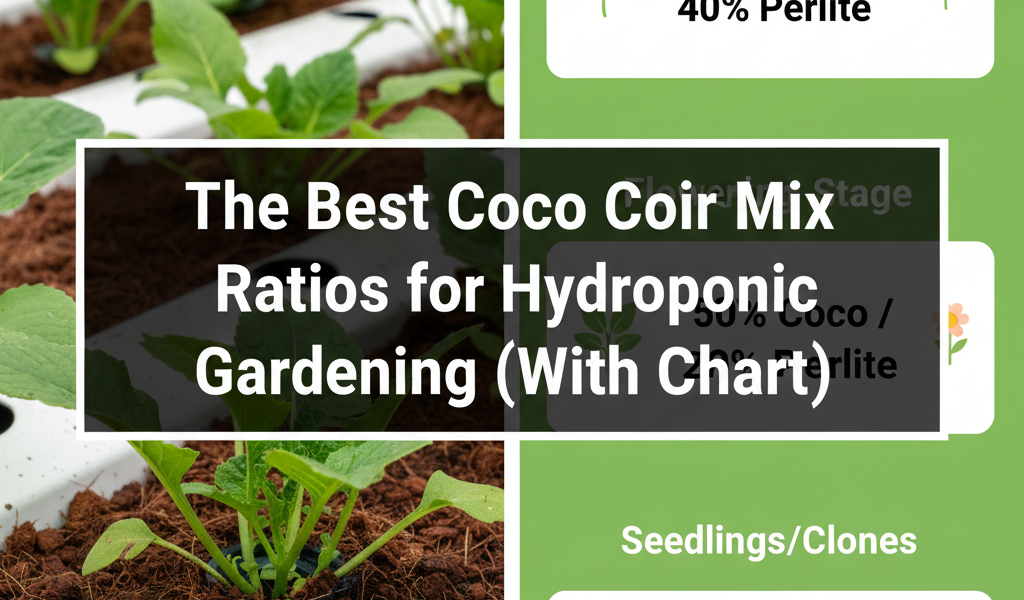
📊 Chart Of Coco Coir Mix Ratio for Hydroponic Gardening
| Plant Type / Goal | Coco Coir (%) | Perlite (%) | Vermiculite or Clay Pebbles (%) | Best For |
|---|---|---|---|---|
| Leafy Greens & Herbs | 70% | 30% | – | NFT & Drip systems |
| Fruiting Plants (Tomatoes, Peppers) | 60% | 30% | 10% | Drip & Ebb-and-Flow |
| Root Crops (Carrots, Beets) | 50% | 40% | 10% | Deep Water Culture |
| Seed Starting & Propagation | 80% | 10% | 10% | Germination trays |
| High Drainage Systems | 50% | 50% | – | Flood tables / Aeroponics |
These ratio for hydroponic gardening provide a great starting point. You can fine-tune the mix based on your local climate and system type.
🧪 Pro Tips for Mixing and Using Coco Coir
1. Always Rinse and Buffer Coco Coir
Raw coco coir may contain salts. Rinse it thoroughly in clean water, then buffer with a calcium-magnesium solution before using.
2. Keep an Eye on EC and pH
For hydroponics, maintain pH between 5.8–6.2 and EC around 1.5–2.0. Balanced conditions ensure nutrient uptake and prevent lockout.
3. Reuse Wisely
Coco coir can be reused for multiple crops. After harvest, wash, dry, and treat it with a mild hydrogen peroxide solution before starting again.
4. Use a Moisture Meter
Coco coir retains more water than you might expect. A moisture meter helps you avoid overwatering — a common beginner mistake.
🌿 Benefits of Coco Coir Mixes in the USA
Coco coir is perfect for U.S. hydroponic growers dealing with diverse climates — from humid Florida to arid Arizona. It provides consistent moisture management and helps reduce water usage by up to 30%.
Because it’s biodegradable and renewable, it’s also an eco-friendly choice compared to mined materials like rockwool or perlite alone.
And when you source high-quality coir from trusted suppliers like Factory’s Depot, you get consistent performance and cleaner crops every season.
🌻 Final Thoughts
The right coco coir mix ratio can make the difference between an average harvest and a thriving hydroponic gardening. By adjusting the proportions of coir, perlite, and other media, you can fine-tune your setup for any crop type or growing system.
Whether you’re growing herbs on a windowsill or tomatoes in a hydroponic greenhouse, coco coir gives your plants the balance they need to flourish.
Ready to start mixing? Explore premium coco coir products and hydroponic supplies at Factory’s Depot — shipped across the USA for growers who care about quality and sustainability.


