
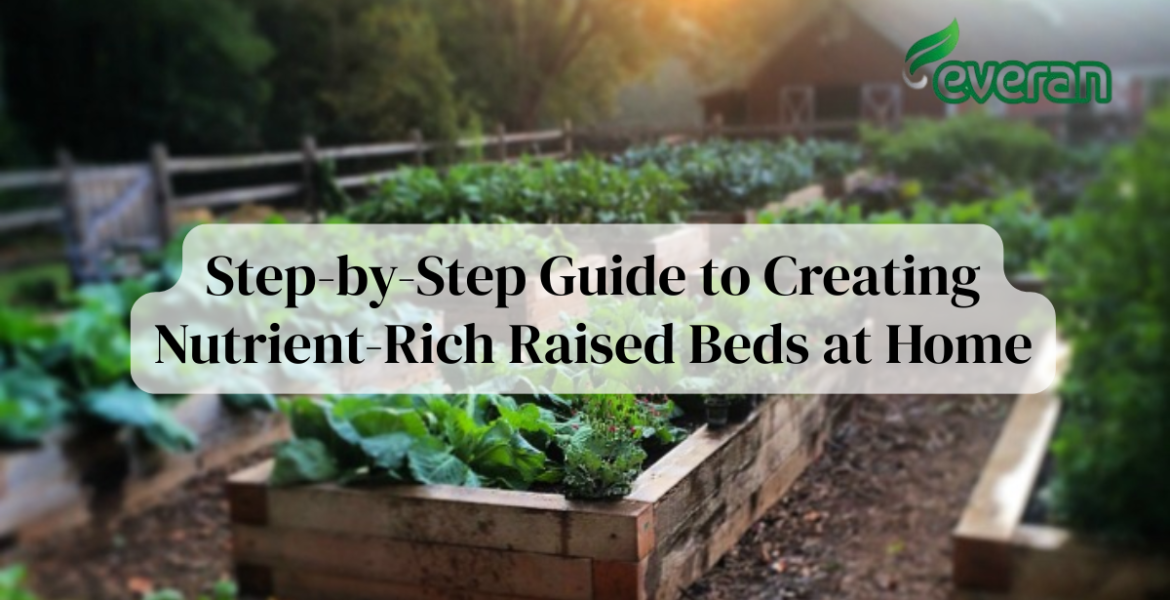
Raised beds are one of the best tools for successful home gardening. They give your plants more room to grow, improve soil quality, and make watering and harvesting easier. With a well-built raised bed, you can grow healthy vegetables, herbs, flowers, and more — even if your backyard soil isn’t great.
This step-by-step guide will show you how to create nutrient-rich raised beds at home. You’ll learn how to choose the right location, prepare your soil mix, and plant with confidence.
1. Choose the Right Location
First, find the best spot for your raised bed. Most vegetables and flowers need at least 6–8 hours of sunlight daily, so pick a sunny area. Make sure the spot has good drainage and is easy to access for watering and harvesting.
Raised beds can be placed directly on grass, soil, patio stones, or even a deck with proper drainage. Just make sure water doesn’t collect underneath and cause rot.
2. Build Your Raised Bed Frame
Raised beds can be built from wood, composite boards, bricks, or stone. Wood is common because it’s affordable and easy to work with.
Standard raised bed dimensions:
-
Width: 3–4 feet (easy to reach into the center)
-
Height: 10–12 inches (minimum)
-
Length: Any size that fits your space
Assemble the frame using screws or brackets so it’s sturdy. Avoid pressure-treated wood unless it’s labeled safe for gardens — or place a protective barrier between the wood and soil.
3. Prepare the Ground and Base Layer
Once your frame is in place, remove any grass or weeds where the bed will sit. If you plan to garden directly on soil, you can leave some turf intact — it will break down over time.
For extra drainage, spread a thin layer of coarse gravel or twigs on the bottom before adding soil. This helps prevent waterlogging after rainy weather.
4. Create a Nutrient-Rich Soil Mix
Great plants start with great soil. Instead of using plain dirt, create a nutrient-rich soil blend that helps roots grow deeply and absorb nutrients easily.
Here’s a simple mix:
-
40% topsoil
-
30% compost
-
20% coconut coir
-
10% perlite or vermiculite
Coconut coir is a sustainable growing medium made from coconut husks. It holds water well while allowing air to circulate around roots. That balance helps plants stay healthy and strong — especially in raised beds where container-style soil can dry out faster.
Mix all ingredients evenly. This blend gives you moisture retention, good aeration, and a nutrient-rich environment for your plants.
5. Level and Fill the Bed
After mixing your soil, add it to the raised bed frame. Spread it evenly and level the surface with a rake.
Aim for the soil to fill the bed about 2–3 inches below the top. This allows room for mulch and watering without overflow.
6. Plan Your Planting Layout
Before planting, decide what you want in your raised bed. Group plants with similar water and sunlight needs together. Taller plants (like tomatoes) should go toward the back or center, while shorter ones (like lettuce and herbs) can go near the front.
Leave enough space between plants so they don’t compete for nutrients or shade each other.
7. Mulch and Water
After planting, cover the soil surface with organic mulch, such as straw or shredded leaves. Mulch helps:
-
Reduce weeds
-
Retain moisture
-
Keep soil temperature even
Water deeply after planting so roots settle into the new soil mix. Aim to keep the soil moist but not waterlogged as plants establish themselves.
8. Maintain and Harvest
Feed your plants with a balanced, organic fertilizer every few weeks — especially heavy-feeding vegetables like tomatoes and peppers. Keep an eye out for pests and remove them quickly so they don’t spread.
As plants grow, mulch again as needed and water consistently during hot weather.
When your vegetables and herbs mature, enjoy the harvest! Raised beds often produce faster and healthier crops thanks to their improved soil conditions.
Conclusion
Creating nutrient-rich raised beds at home doesn’t have to be hard. With the right location, good soil mix, and a little care, you’ll give your plants the ideal environment to grow strong and productive.
Try incorporating coconut coir in your mix for better moisture control and healthier roots. Your backyard garden will thank you with bigger harvests and more vibrant growth — season after season.


