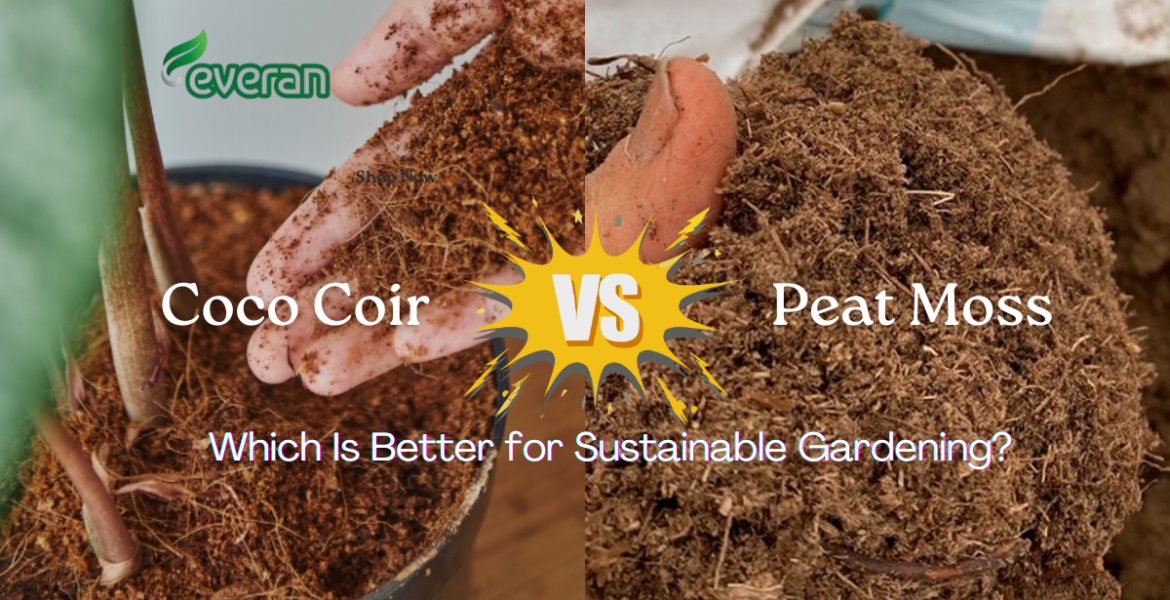
When it comes to gardening, choosing the right growing medium is just as important as selecting the right plants. Two of the most commonly compared options are coco coir and peat moss. Both improve soil structure and water retention, but when it comes to sustainability, they couldn’t be more different.
If you’re gardening in the USA and looking for an eco-friendly option, this guide will help you understand the differences between coco coir and peat moss—and which one is better for sustainable gardening.
What Is Coco Coir?
Coco coir is made from the fibrous husk of coconuts. It’s a byproduct of the coconut industry, which means it makes use of something that would otherwise go to waste. The husks are processed, cleaned, and compressed into blocks, chips, or loose fibers that can be hydrated and used as a soil amendment or hydroponic medium.
Coco coir is popular because it:
-
Retains water while still draining well
-
Has a neutral pH (5.5–6.8)
-
Supports healthy root growth
-
Is safe, natural, and renewable
What Is Peat Moss?
Peat moss is harvested from peat bogs, which are wetlands formed over thousands of years from decomposed plant matter. Gardeners have used it for decades as a soil amendment because of its water-holding capacity and ability to lighten heavy soils.
However, peat moss is non-renewable on a human timescale. Harvesting it releases stored carbon and damages sensitive ecosystems, making it a controversial choice among eco-conscious gardeners.
Coco Coir vs Peat Moss: Key Differences
1. Sustainability
-
Coco Coir: Renewable and eco-friendly, since coconuts are harvested every year.
-
Peat Moss: Takes centuries to form, making it unsustainable to harvest regularly.
✅ Winner: Coco Coir
2. Water Retention and Drainage
-
Coco Coir: Holds water well but also drains excess moisture, reducing the risk of root rot.
-
Peat Moss: Retains water but can become waterlogged or hydrophobic (repels water) if it dries out.
✅ Winner: Coco Coir
3. pH Balance
-
Coco Coir: Naturally neutral (5.5–6.8), which works well for most plants.
-
Peat Moss: More acidic (pH 3.5–4.5), often requiring lime to balance soil conditions.
✅ Winner: Coco Coir
4. Reusability
-
Coco Coir: Can be cleaned, sterilized, and reused for multiple growing cycles.
-
Peat Moss: Breaks down quickly and can only be used once.
✅ Winner: Coco Coir
5. Availability and Cost
-
Coco Coir: Widely available in the USA as blocks, chips, or pre-mixed soil blends. Slightly higher upfront cost, but reusable.
-
Peat Moss: Traditionally cheaper but becoming less available due to environmental concerns.
✅ Winner: Tie (Coco coir is more cost-effective long-term).
Which One Should You Choose?
If your priority is eco-friendly, sustainable gardening, coco coir is clearly the better choice. It provides excellent water management, supports healthy root systems, and helps you garden with peace of mind, knowing you’re using a renewable resource.
Peat moss, while effective as a soil amendment, is not sustainable in the long run. As more gardeners across the USA shift toward greener practices, coco coir is quickly becoming the preferred option for raised beds, container gardens, vertical gardening, and even hydroponics.
Final Thoughts
When it comes to the debate of coco coir vs peat moss, coco coir is the winner for sustainable gardening. It’s renewable, versatile, and safe for both indoor and outdoor use. By choosing coco coir, you’re not only giving your plants a healthy growing medium—you’re also making a positive impact on the environment.
At Factory’s Deport, we supply premium coco coir products across the USA, helping gardeners embrace eco-friendly practices without sacrificing results.


