
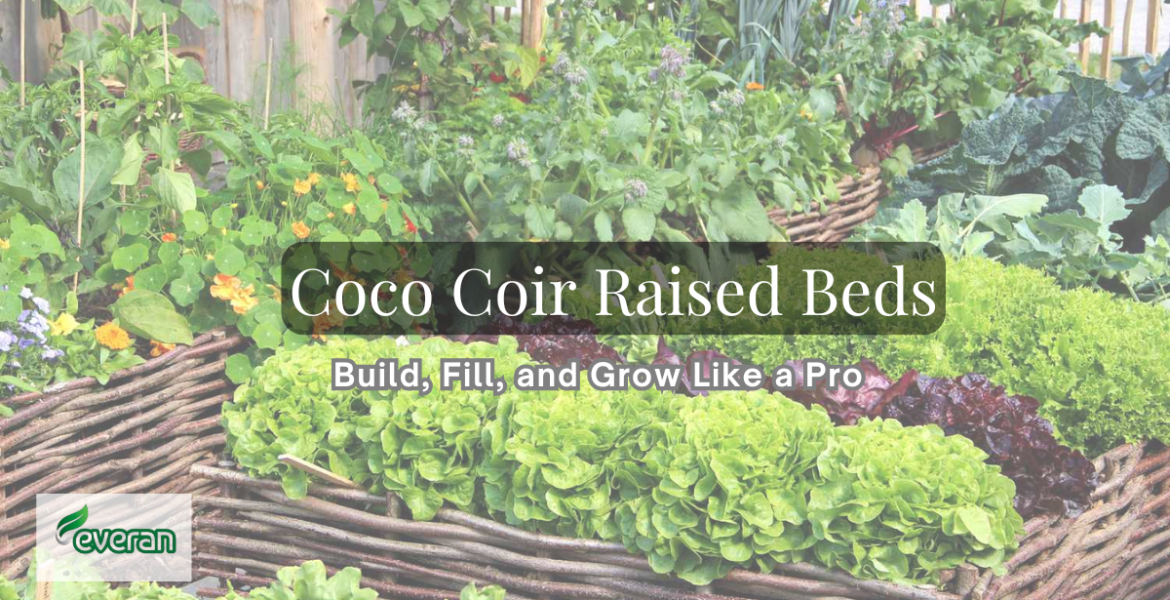
Raised bed gardening is one of the easiest and most rewarding ways to grow healthy plants right in your backyard. Whether you’re growing vegetables, herbs, or flowers, the secret to success lies in your soil mix. And one of the best ingredients you can add is coco coir — a natural, eco-friendly material that helps your plants thrive.
In this guide, we’ll walk you through how to build, fill, and grow in raised beds using coco coir, so you can enjoy lush, productive gardens all season long.
🧱 Step 1: Build Your Raised Bed
Before you think about filling your raised bed, start with a strong, durable structure. You can use wood, galvanized metal, or recycled plastic lumber — just make sure it’s safe and untreated if you plan to grow edibles.
Tips for raised bed construction:
-
Ideal height: 12–18 inches
-
Width: Keep it under 4 feet wide so you can reach the center easily
-
Location: Choose a sunny spot (6+ hours of light per day)
-
Drainage: Make sure there are drainage holes or gravel underneath
Once your frame is ready, it’s time for the most important part — the soil mix.
🌱 Step 2: Fill Your Raised Bed with Coco Coir Mix
Traditional raised bed mixes often use peat moss, but coco coir is a more sustainable, longer-lasting, and moisture-balanced option. It comes from the husk of coconuts and is completely renewable.
Here’s a simple formula for the perfect raised bed mix using coco coir:
DIY Coco Coir Raised Bed Mix Recipe:
-
40% Coco Coir – for moisture retention and structure
-
30% Compost – adds nutrients and beneficial microbes
-
20% Perlite or Pumice – improves drainage and root aeration
-
10% Garden Soil or Topsoil – helps balance texture and minerals
Mix these thoroughly in a wheelbarrow or directly in the bed. Hydrate the coco coir first by soaking it in water until it expands and becomes fluffy. You’ll love how soft and light the texture feels — your plants’ roots will too!
🌻 Step 3: Start Planting
Now that your raised bed is filled, it’s planting time! Coco coir works beautifully for vegetables, herbs, and even flowers. It holds moisture evenly, preventing dry pockets that can stress plants.
Top plants to grow in coco coir raised beds:
-
Tomatoes
-
Peppers
-
Lettuce and leafy greens
-
Strawberries
-
Herbs like basil, mint, and parsley
Because coco coir is neutral in pH (around 6.0–6.5), it pairs well with organic fertilizers or compost teas. You can grow both shallow- and deep-rooted plants successfully.
💧 Step 4: Water and Maintain
Coco coir’s biggest advantage is its excellent water-holding capacity. It retains moisture without becoming soggy, meaning you’ll water less often than with regular soil.
However, because it contains minimal nutrients, you’ll need to fertilize regularly. Use organic compost, worm castings, or a balanced liquid fertilizer every few weeks.
Each season, refresh your bed by mixing in a bit of new coco coir and compost. You can reuse coco coir for multiple seasons with proper care — simply rinse and rehydrate before replanting.
🌎 Why Coco Coir Raised Beds Are Perfect for USA Gardeners
Across the USA, gardeners deal with everything from sandy soil in Florida to clay-heavy ground in Texas and the Midwest. Coco coir solves these challenges by balancing drainage and moisture retention. It’s also eco-friendly, pet-safe, and kid-safe, making it perfect for family gardens.
Plus, it’s lightweight — ideal for urban gardeners or anyone who wants an easy-to-manage growing system.
🌼 Final Thoughts
Switching to coco coir for your raised beds can transform your gardening experience. It’s sustainable, easy to use, and supports stronger, healthier root systems.
Ready to try it? Explore high-quality coco coir blocks, bricks, and growing mediums at Factory’s Depot. We supply premium-grade coco coir across the USA to help gardeners build greener, better-growing raised beds — naturally.


